Leucorrhoea, commonly known as white discharge, is a condition experienced by many women at different stages of life. In most cases, it is a natural process that helps keep the vaginal area clean and protected. However, when the discharge becomes excessive, changes in color, or is accompanied by odor or irritation, it may indicate an underlying issue. Understanding the causes of leucorrhoea is important to identify whether it is normal or requires attention.
In today’s lifestyle, factors like stress, poor diet, hormonal imbalance, and infections have increased the number of women experiencing abnormal discharge. Many women often search questions like “why does white discharge happen” or “is leucorrhoea normal or not.” This guide will help you understand everything in a simple and clear way.
What is Leucorrhoea
Leucorrhoea refers to a whitish or yellowish vaginal discharge. It can be normal or abnormal depending on its quantity, consistency, and associated symptoms.
Normal Vaginal Discharge
Normal discharge is a part of the body’s natural defense system. It helps in:
- Keeping the vaginal area clean
- Preventing infections
- Maintaining healthy pH balance
This type of discharge is usually:
- Clear or milky white
- Odorless
- Not associated with itching or pain
Abnormal Leucorrhoea
Abnormal discharge may be a sign of infection or imbalance. It can be:
- Thick, sticky, or excessive
- Yellowish or greenish in color
- Foul smelling
- Associated with itching or irritation
Understanding the difference helps in identifying the real causes of leucorrhoea.
Causes of Leucorrhoea
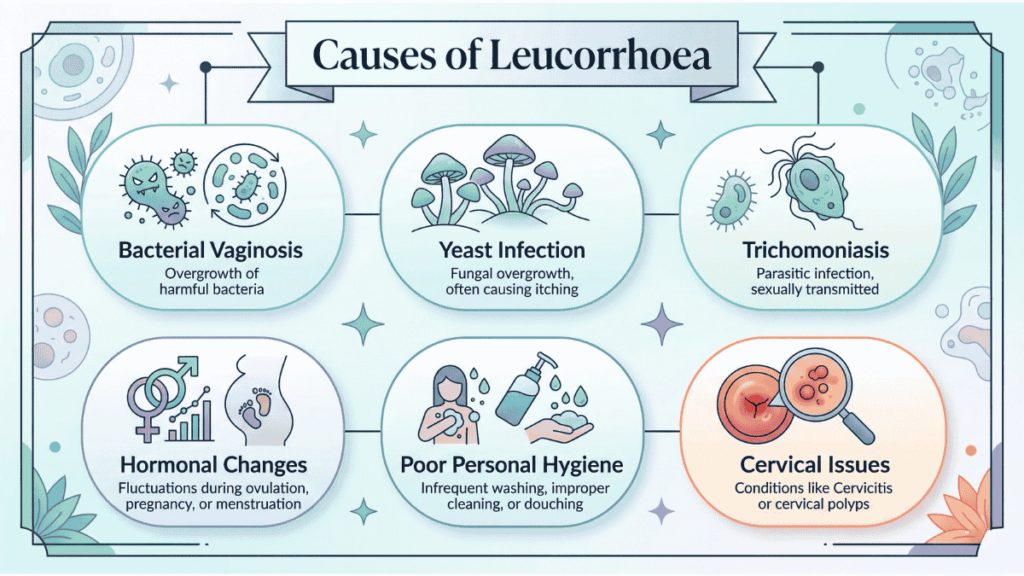
There are several reasons why leucorrhoea may occur. Some are harmless, while others may need medical attention. Below are the most common causes of leucorrhoea explained in detail.
Hormonal Imbalance
Hormonal changes are one of the main causes. Fluctuations in estrogen levels during puberty, menstrual cycle, pregnancy, or menopause can increase vaginal discharge.
Vaginal Infections
Infections are a major reason for abnormal discharge. These may include:
- Fungal infections
- Bacterial infections
- Sexually transmitted infections
These infections often cause foul smell, itching, or irritation.
Poor Hygiene
Lack of proper hygiene or using harsh products can disturb the natural balance of the vaginal area, leading to excessive discharge.
Nutritional Deficiency
Lack of essential nutrients like iron, vitamins, and minerals can weaken the body and lead to chronic leucorrhoea.
Stress and Lifestyle
Mental stress, lack of sleep, and unhealthy habits can affect hormonal balance and immunity, which may contribute to the causes of leucorrhoea.
Pregnancy and Physiological Changes
During pregnancy, increased blood flow and hormonal changes can lead to more discharge. This is usually normal unless accompanied by discomfort.
Common Symptoms of Leucorrhoea
Leucorrhoea symptoms can vary depending on the underlying cause. In many cases, women experience mild symptoms, while others may face discomfort.
Common symptoms include
- White or yellow vaginal discharge
- Foul or unpleasant smell
- Itching or irritation in the vaginal area
- Weakness or fatigue
- Lower abdominal or back pain
- Burning sensation during urination
If these symptoms persist, it may indicate abnormal discharge and should not be ignored.
When is Leucorrhoea a Problem
Many women wonder whether leucorrhoea is normal or not. The answer depends on the symptoms and changes in discharge.
Leucorrhoea may become a concern when:
- The discharge becomes excessive
- There is a strong or foul smell
- Itching or irritation is present
- The color changes to yellow or green
- It affects daily comfort
In such cases, identifying the exact causes of leucorrhoea is important for proper management.
Types of Leucorrhoea
Leucorrhoea can be classified into two main types based on its nature.
Physiological Leucorrhoea
This is normal discharge that occurs due to natural body processes such as:
- Puberty
- Ovulation
- Pregnancy
It does not require treatment.
Pathological Leucorrhoea
This type occurs due to infections or health issues. It may be associated with:
- Foul smell
- Discomfort
- Changes in color or consistency
This condition requires proper evaluation and care.
Treatment Options for Leucorrhoea
Treatment depends on the underlying cause. Identifying the exact causes of leucorrhoea helps in choosing the right approach.
General treatment approaches include
- Maintaining proper hygiene
- Managing infections with appropriate care
- Improving diet and nutrition
- Reducing stress levels
- Avoiding irritants or harsh products
In many cases, lifestyle correction plays a major role in managing symptoms.
Homeopathy for Leucorrhoea
Many women prefer natural approaches for long-term management. Homeopathy focuses on treating the root cause rather than just controlling symptoms.
Homeopathic care aims to:
- Improve hormonal balance
- Strengthen immunity
- Address individual symptoms
- Support overall reproductive health
At Dubai Homeo Clinic, treatment is personalized based on each patient’s condition, lifestyle, and symptoms. The goal is to provide gentle and long-term support for women’s health concerns.
Read more about: Vitiligo Causes, Symptoms, Types and Treatment Guide
Lifestyle and Diet Tips
Simple daily habits can help manage and prevent leucorrhoea.
Helpful tips include
- Maintain proper intimate hygiene
- Drink enough water
- Include fruits and vegetables in diet
- Avoid excessive sugar and processed foods
- Wear breathable cotton clothing
- Manage stress through relaxation techniques
These small changes can help reduce the risk and improve overall health.
Leucorrhoea is a common condition that may be normal or a sign of an underlying issue. Understanding the causes of leucorrhoea, recognizing symptoms, and making lifestyle changes can help in managing the condition effectively.
While mild cases may improve with proper care, persistent symptoms should not be ignored. A holistic approach that focuses on overall health and balance can provide better long-term results.
At Dubai Homeo Clinic, patients receive personalized care aimed at identifying root causes and supporting women’s health naturally and safely.