Vitiligo is a skin condition in which certain areas of the skin lose their natural color and develop white patches. This happens when the cells responsible for producing pigment, known as melanocytes, stop working or are destroyed. As a result, the affected areas appear lighter than the surrounding skin.
Although vitiligo is not dangerous or contagious, it can affect a person’s appearance and self-confidence. Many people search online to understand vitiligo causes, symptoms, and possible treatment options before consulting a specialist.
Vitiligo can appear at any age, but it often begins before the age of 30. It may start with small white spots on the skin and gradually spread to other areas of the body over time. In some cases, the patches remain stable for years without spreading.
Understanding vitiligo causes, early signs, and available treatment approaches can help individuals manage the condition more effectively.
What is Vitiligo
Vitiligo is a long-term skin disorder that affects the pigmentation of the skin. The condition develops when melanocytes, the pigment-producing cells in the skin, stop producing melanin or are destroyed.
Melanin is the natural pigment that gives color to the skin, hair, and eyes. When melanin production decreases or stops in certain areas, the skin develops white patches.
Vitiligo can appear anywhere on the body, but it most commonly affects areas that are frequently exposed to sunlight or friction.
Commonly affected areas include:
• Face and lips
• Hands and fingers
• Arms and elbows
• Knees and feet
• Around the eyes
• Genital areas
The condition can affect people of all skin tones, but it is often more noticeable in individuals with darker skin because of the contrast between normal and depigmented skin.
Vitiligo Causes
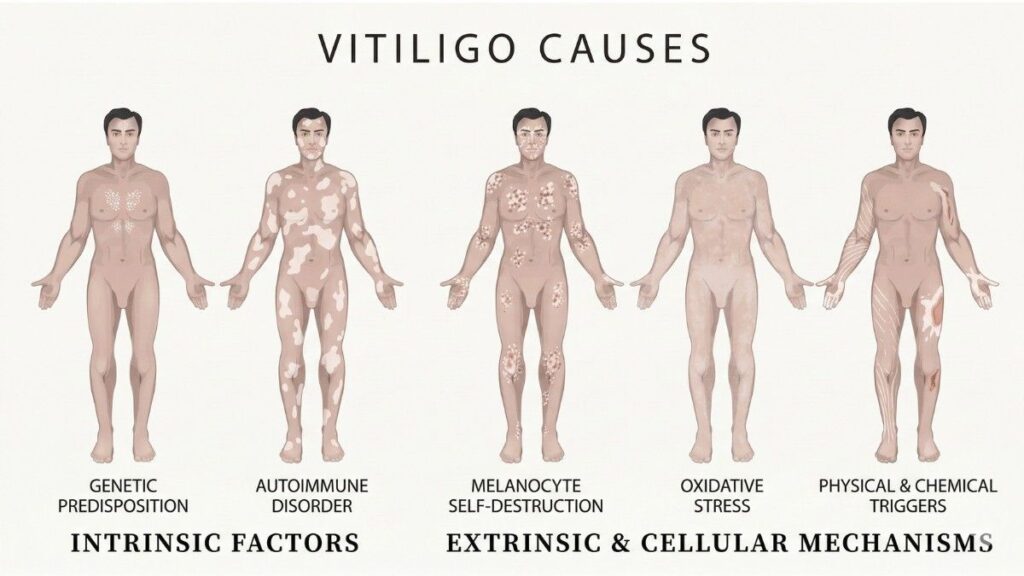
The exact reason why vitiligo develops is still not fully understood. However, medical experts believe that multiple factors may contribute to the condition. Understanding vitiligo causes helps doctors determine the most suitable management approach for each individual.
Below are some of the most commonly identified vitiligo causes.
Autoimmune Disorders
One of the most widely accepted vitiligo causes is an autoimmune reaction.
In an autoimmune condition, the body’s immune system mistakenly attacks its own healthy cells. In the case of vitiligo, the immune system targets melanocytes and gradually destroys them. Once these pigment cells are damaged, the skin loses its natural color in those areas.
Vitiligo is sometimes associated with other autoimmune conditions such as thyroid disorders.
Genetic Factors
Genetics may also play a role in the development of vitiligo. Research shows that some individuals inherit genes that make them more susceptible to the condition.
If a close family member has vitiligo or other autoimmune diseases, the risk may be slightly higher. However, not everyone with a family history will develop vitiligo.
Emotional or Physical Stress
Severe emotional stress or physical trauma may also contribute to the development of vitiligo in certain individuals.
Stress can affect the immune system and hormonal balance in the body. In some cases, people notice the appearance of vitiligo patches after experiencing significant emotional stress or major life changes.
Skin Injury or Sunburn
Damage to the skin caused by burns, cuts, or severe sunburn may trigger vitiligo patches in some individuals. This phenomenon is known as the Koebner effect.
When the skin experiences trauma, it may sometimes lead to the loss of pigment in that particular area.
Chemical Exposure
Exposure to certain industrial chemicals or harsh substances may also damage melanocytes and contribute to pigment loss.
People who work in industries that involve chemical exposure may sometimes experience depigmentation in areas that frequently come into contact with these substances.
Common Symptoms of Vitiligo
Vitiligo symptoms usually develop gradually. In the early stages, small white patches may appear on the skin. Over time, these patches may increase in size or spread to other areas of the body.
The most noticeable symptom of vitiligo is the loss of skin pigment.
Common symptoms include
• White or light-colored patches on the skin
• Loss of color around the mouth, eyes, or nose
• Premature whitening or graying of hair
• Loss of pigment inside the mouth or nose
• Symmetrical patches on both sides of the body
• Gradual enlargement of existing patches
Vitiligo does not usually cause pain or physical discomfort, but the change in skin appearance may lead to emotional stress for some individuals.
Types of Vitiligo
Vitiligo can appear in different patterns depending on how the depigmentation spreads across the body. Doctors classify the condition into several types.
Non-Segmental Vitiligo
Non-segmental vitiligo is the most common type.
This form usually appears on both sides of the body in a symmetrical pattern. The patches may develop gradually and spread over time.
Common characteristics include:
• White patches on hands, knees, or face
• Symmetrical appearance on both sides of the body
• Slow progression over time
Segmental Vitiligo
Segmental vitiligo affects only one side of the body.
This type usually appears at a younger age and progresses for a limited time before stabilizing.
Characteristics include:
• Appears on one side of the body
• Spreads quickly during early stages
• Often stabilizes after some time
Focal Vitiligo
Focal vitiligo involves only a few isolated patches in one area of the body without significant spreading.
This type is less common and may remain stable for long periods.
How Vitiligo is Diagnosed
Vitiligo is usually diagnosed through a physical examination of the skin by a healthcare professional.
Doctors carefully evaluate the appearance, location, and pattern of the white patches.
Additional diagnostic methods may include:
• Examination under a Wood’s lamp to highlight depigmented areas
• Blood tests to check for autoimmune conditions
• Skin biopsy in rare cases to confirm diagnosis
Early diagnosis can help determine the most suitable treatment approach and prevent further spread in some cases.
Treatment Options for Vitiligo
Although vitiligo cannot always be completely cured, several treatment options can help improve the appearance of the skin and manage the condition.
Treatment depends on various factors such as the extent of pigment loss, skin type, and how long the condition has been present.
Common treatment options include
• Topical medications to reduce inflammation
• Light therapy to stimulate melanin production
• Skin camouflage techniques to cover patches
• Surgical procedures in severe or stable cases
Read more about: Homeopathy for Piles | Causes, Symptoms & Treatment
Homeopathic Approach to Vitiligo
Many people also explore holistic treatment options to support their skin health and address internal factors that may contribute to vitiligo.
Homeopathy focuses on improving the body’s natural healing ability and addressing the underlying imbalances that may influence skin disorders.
Some potential benefits of homeopathy include:
• Personalized treatment based on individual symptoms
• Gentle and natural remedies
• Focus on improving overall body balance
• Long-term support for chronic conditions
At Dubai Homeo Clinic, patients receive individualized consultations where the practitioner studies the patient’s medical history, lifestyle, and symptoms before recommending suitable remedies.
Lifestyle Tips to Support Skin Health
Certain lifestyle changes may help individuals manage vitiligo more effectively and maintain healthier skin.
Helpful habits include:
• Protecting the skin from excessive sun exposure
• Using sunscreen regularly
• Maintaining a balanced diet rich in vitamins and antioxidants
• Managing stress through relaxation techniques
• Avoiding harsh chemicals or skin irritants
While these steps may not cure vitiligo, they can help protect the skin and reduce potential triggers.
When to Seek Medical Advice
If you notice unusual white patches appearing on your skin, it is important to consult a healthcare professional for proper evaluation.
Early medical advice can help identify vitiligo causes, confirm the diagnosis, and explore appropriate treatment options.
Individuals seeking a holistic approach to skin health may consider consulting experienced practitioners. Clinics such as Dubai Homeo Clinic offer personalized guidance and natural treatment approaches aimed at supporting long-term skin wellness.